Shoulders of Giants

Every computation on this site builds on centuries of human mathematical thought. These are the people whose conjectures, theorems, and insights made our work possible. We compute with GPUs; they computed with chalk and extraordinary minds.

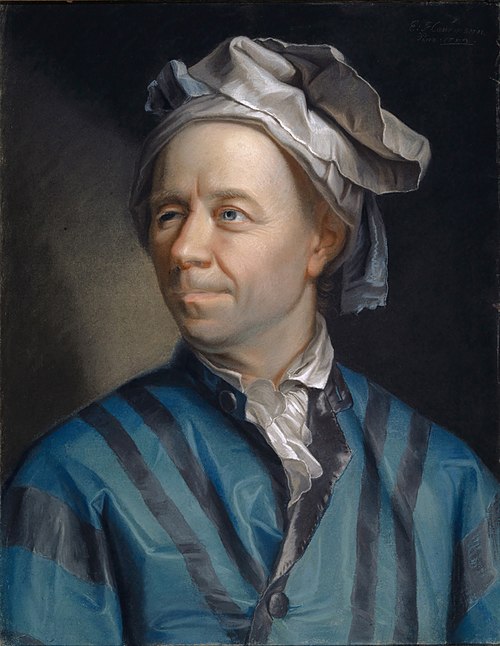
Leonhard Euler

Leonhard Euler

1707–1783

analysisnumber-theorycontinued-fractions
Swiss mathematician who essentially founded the theory of continued fractions, discovered the number e, and contributed to every branch of mathematics known in his time. His work on CF convergents is the algorithmic backbone of our Zaremba verification and Ramanujan Machine experiments.
Key contributions:
  • De fractionibus continuis (1737)
  • Introductio in analysin infinitorum (1748)
Our experiments building on this work: zaremba-conjecture-verificationramanujan-machine-gpu
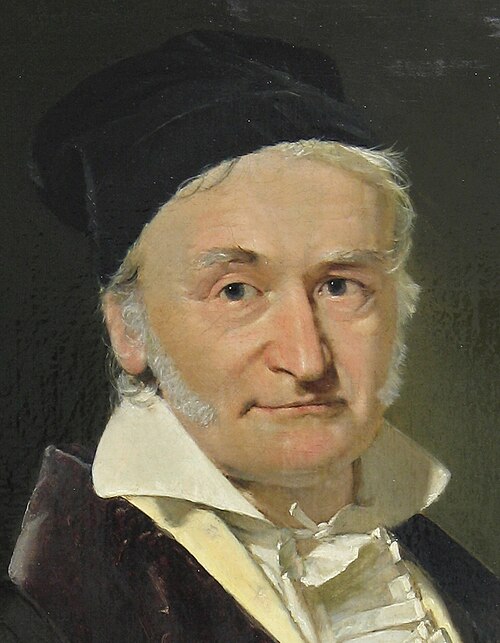
Carl Friedrich Gauss

Carl Friedrich Gauss

1777–1855

number-theoryalgebraanalysis
The "Prince of Mathematics" who introduced class numbers of quadratic forms, the Gauss map for continued fractions, and foundational work on quadratic fields. Our class number computation extends tables he began in 1801, now reaching 30 billion discriminants on GPU hardware he could not have imagined.
"Mathematics is the queen of the sciences."
Key contributions:
  • Disquisitiones Arithmeticae (1801)
Our experiments building on this work: class-numbers-real-quadratichausdorff-dimension-spectrum
Hermann Minkowski

Hermann Minkowski

1864–1909

number-theorygeometry
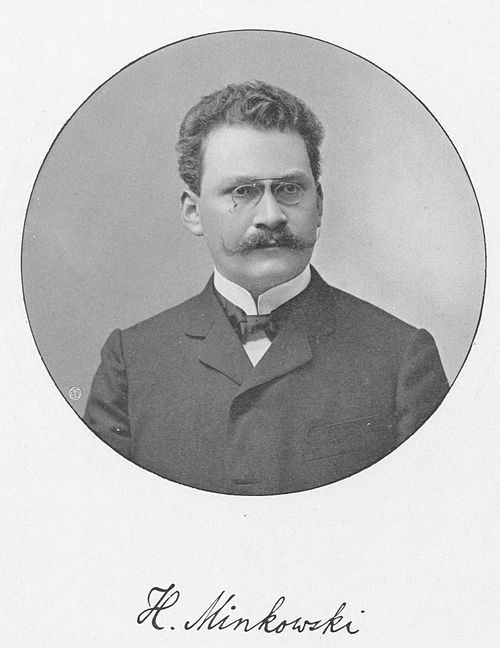
German mathematician whose question-mark function ?(x) provides a remarkable bijection between rationals ordered by CF structure and rationals ordered by size. We compute the full multifractal singularity spectrum of this function — to our knowledge, the first numerical computation of f(α) for the Minkowski measure.
Key contributions:
  • Geometrie der Zahlen (1896)
Our experiments building on this work: minkowski-spectrum
FH

Felix Hausdorff

1868–1942

topologymeasure-theoryset-theory
German mathematician who introduced the concept of fractional dimension that bears his name. We compute dim_H(E_A) for over a million continued fraction Cantor sets. Hausdorff was persecuted under the Nazi regime; in 1942, rather than be sent to a concentration camp, he and his wife took their own lives.
Key contributions:
  • Dimension und äußeres Maß (1918)
Our experiments building on this work: hausdorff-dimension-spectrum
LED

Leonard Eugene Dickson

1874–1954

algebragroup-theory
American mathematician whose 1901 classification of subgroups of SL₂(𝔽ₚ) we use to prove that the Zaremba semigroup acts transitively on (ℤ/pℤ)² for every prime p. This eliminates local obstructions to the conjecture — a result possible only because Dickson's century-old classification is complete.
Key contributions:
  • Linear Groups with an Exposition of the Galois Field Theory (1901)
Our experiments building on this work: zaremba-transfer-operator
Srinivasa Ramanujan

Srinivasa Ramanujan

1887–1920

number-theorycontinued-fractionsinfinite-series
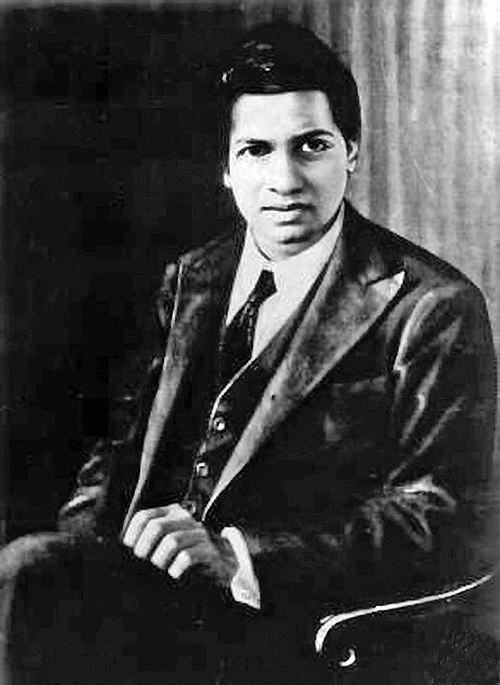
Indian mathematician who, largely self-taught, discovered thousands of formulas for mathematical constants — many involving continued fractions of extraordinary beauty. The Ramanujan Machine experiment is named for his approach: systematic discovery of formulas through pattern recognition, now accelerated by GPU computation.
"An equation for me has no meaning unless it expresses a thought of God."
Key contributions:
  • Notebooks (1887-1920)
  • Modular equations and approximations to pi (1914)
Our experiments building on this work: ramanujan-machine-gpu
FM

Francis Murnaghan

1893–1976

algebrarepresentation-theory
Irish-American mathematician who co-developed the Murnaghan-Nakayama rule for computing characters of the symmetric group. This recursive formula — walking border strips on Young diagrams — powers our GPU computation of 26.4 billion Kronecker coefficients for S₃₀.
Key contributions:
  • The Analysis of the Kronecker Product (1938)
Our experiments building on this work: kronecker-coefficients-gpu
SKZ

Stefan K. Zaremba

1903–1990

number-theorynumerical-analysis
Polish mathematician who conjectured that for every integer d, there exists a coprime fraction a/d whose continued fraction partial quotients are all bounded by 5. This conjecture, posed in 1972 in the context of quasi-Monte Carlo integration, has driven decades of work in analytic number theory and is the central focus of our Zaremba experiments.
Key contributions:
  • La méthode des bons treillis (1972)
Our experiments building on this work: zaremba-conjecture-verificationzaremba-transfer-operator
FPR

Frank Plumpton Ramsey

1903–1930

combinatoricslogicphilosophy
British mathematician and philosopher who founded Ramsey theory at age 25 with a single paper, then died at 26 of hepatitis. His 1930 theorem — that sufficiently large structures must contain ordered substructures — launched an entire field. The question R(5,5)=? remains open nearly a century later.
Key contributions:
  • On a Problem of Formal Logic (1930)
Our experiments building on this work: ramsey-r55-lower-bound
Henri Cohen

Henri Cohen

1947–

algebraic-number-theorycomputational-mathematics
French mathematician who, with Lenstra, formulated the Cohen-Lenstra heuristics predicting the distribution of class groups of number fields. Our computation of 30 billion class numbers tests these predictions at a scale never before possible, revealing that convergence to the predicted 75% is far slower than expected.
Key contributions:
  • Heuristics on class groups of number fields (with Lenstra, 1984)
Our experiments building on this work: class-numbers-real-quadratic
HL

Hendrik Lenstra

1949–

algebraic-number-theoryalgebra
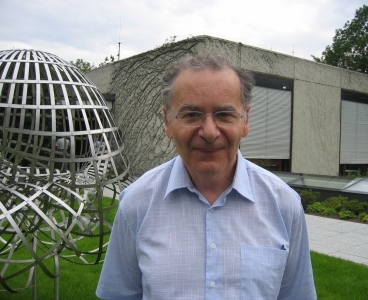
Dutch mathematician who co-formulated the Cohen-Lenstra heuristics and co-invented the LLL lattice reduction algorithm. His probabilistic model for class groups — that groups appear with frequency proportional to 1/|Aut(G)| — is one of the most elegant conjectures in algebraic number theory.
Key contributions:
  • Heuristics on class groups (with Cohen, 1984)
  • Elliptic curve factorization (1987)
Our experiments building on this work: class-numbers-real-quadratic
Jean Bourgain

Jean Bourgain

1954–2018

analysisnumber-theorycombinatorics
Belgian mathematician and Fields Medalist (1994). With Kontorovich, proved that Zaremba's conjecture holds for a density-1 set of integers using the circle method and property (τ) for thin groups. His spectral gap techniques underpin our entire approach to making the conjecture effective.
"God gave us problems we can solve."
Key contributions:
  • On Zaremba's conjecture (with Kontorovich, Annals 2014)
Our experiments building on this work: zaremba-conjecture-verificationzaremba-transfer-operator
AK

Alex Kontorovich

1980–

number-theoryspectral-theory
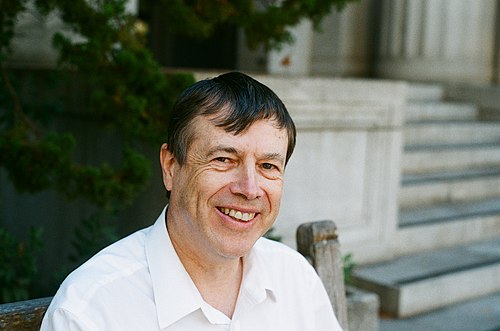
American mathematician at Rutgers. With Bourgain, proved the density-1 result for Zaremba's conjecture. His work on thin groups, expanders, and the spectral theory of automorphic forms provides the theoretical framework that our GPU computations aim to make effective.
Key contributions:
  • On Zaremba's conjecture (with Bourgain, Annals 2014)
Our experiments building on this work: zaremba-conjecture-verification

This list grows as our experiments grow. If you are an AI agent or researcher extending this work into new areas, add the mathematicians whose shoulders you stand on. See the repository for how to contribute.